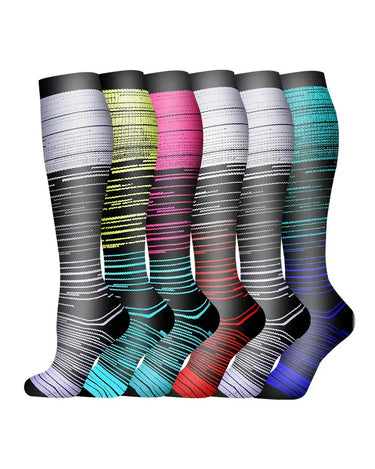
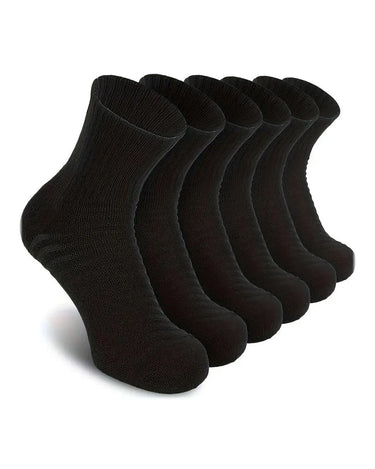
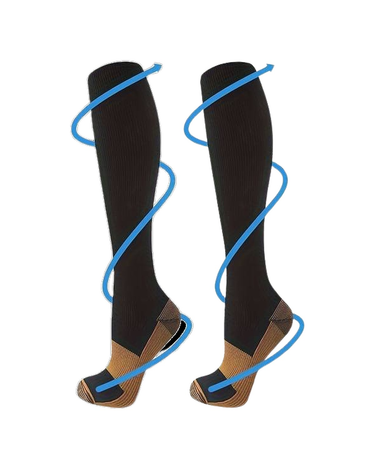
Men's compression socks for long days on your feet, long-haul flights, car journeys and sport. The graduated fit is firmest at the ankle and eases towards the calf, so the sock stays in place and your legs feel lighter at the end of the day.
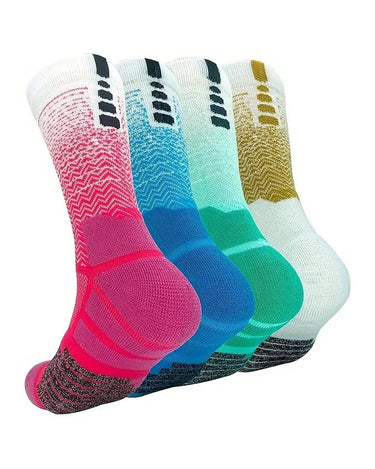
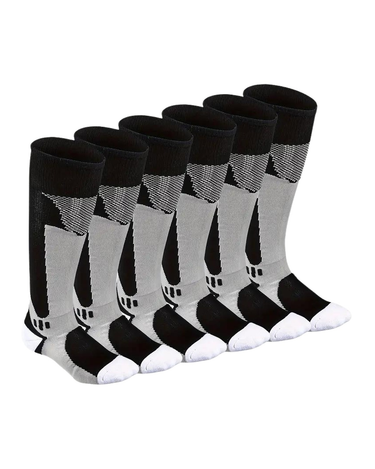
Choose below-the-knee styles for travel and work, or sporty socks with targeted compression bands and a cushioned sole for running, padel and the gym. Breathable yarns, a soft cuff that doesn't dig in, and sizes that fit from EU 38 to 46.
Please note: these are comfort compression socks, not a medical device. If you have circulation problems or have been told to wear medical stockings, ask your doctor or pharmacist first.
Compression socks have a tighter knit than usual, often firmer at the ankle and softer towards the calf. Many people wear them for sport, on long journeys or on days spent on their feet, because the sock stays close to the leg. Several styles have a cushioned sole as well.
An important note
These socks are not a medical device. For medical needs, ask your doctor which sock and which compression level suit you.
Styles and use
You will find striped below-the-knee socks, cushioned sports socks and styles with non-slip details. For softer training socks see our men's sports socks.
With a compression sock, size matters more than usual: too small feels tight, too large does not hug the leg. Use the size guide on each product page. Every other style is in our men's socks. Choose your pack size on the product page.
Compression levels in mmHg
Compression is measured in millimetres of mercury (mmHg): it is the pressure the sock puts on the ankle. As a general guide, travel and sports socks usually sit around 10–20 mmHg. Medical compression stockings start at class 1 (about 18–21 mmHg) and go up to class 2 (about 23–32 mmHg) and class 3 (over 34 mmHg): those classes are chosen with your doctor.
The socks on this page are comfort compression socks for sport and travel, and they do not claim a certified medical class.
Who they are for
For people who spend long hours standing or sitting at work, for long flights and long car or train journeys, and for running, padel or the gym when you want a sock that stays put and fits close. They do not replace anti-embolism stockings prescribed after surgery or for circulation problems.
How to measure your leg
Measure in the morning, when your leg is least swollen. With a tape measure, take the ankle at its narrowest point and the calf at its widest; for below-the-knee styles you also need the length from the floor to the back of the knee. Compare your measurements with the style's size guide: if you are between two sizes, choose the one that matches your calf.
How to put them on
Put them on in the morning, with dry legs. Turn the sock inside out down to the heel, slide your foot in and settle the heel, then roll the sock up a little at a time, without pulling it by the cuff. There should be no creases at the end: leave the cuff below the knee, without folding it over.
Frequently asked questions
Are anti-embolism socks and compression socks the same thing?
The terms are often used as synonyms. Strictly speaking, anti-embolism stockings are a medical product used on a doctor's advice, for example in hospital. Our men's stretch socks are comfort compression socks for everyday wear, sport and travel.
Can I wear them on a plane?
Yes, many people wear them on long flights because the sock stays close to the leg even when sitting. If you have had circulation problems or a thrombosis, ask your doctor first which sock to use.
How many hours a day can I wear them?
Wear them during the day, at work, while travelling or training, and take them off in the evening. If you feel discomfort or tingling, or the sock leaves deep marks, take it off and check the size again.
Which size should I choose?
Follow the size guide on the product page with your ankle and calf measurements. A sock that is too small squeezes; one that is too big does not hug the leg and loses its compression.
How do I wash them?
At 30–40 °C, ideally inside out and in a laundry bag, without fabric softener. Dry them in the air, away from radiators and the tumble dryer, so the knit stays elastic.